


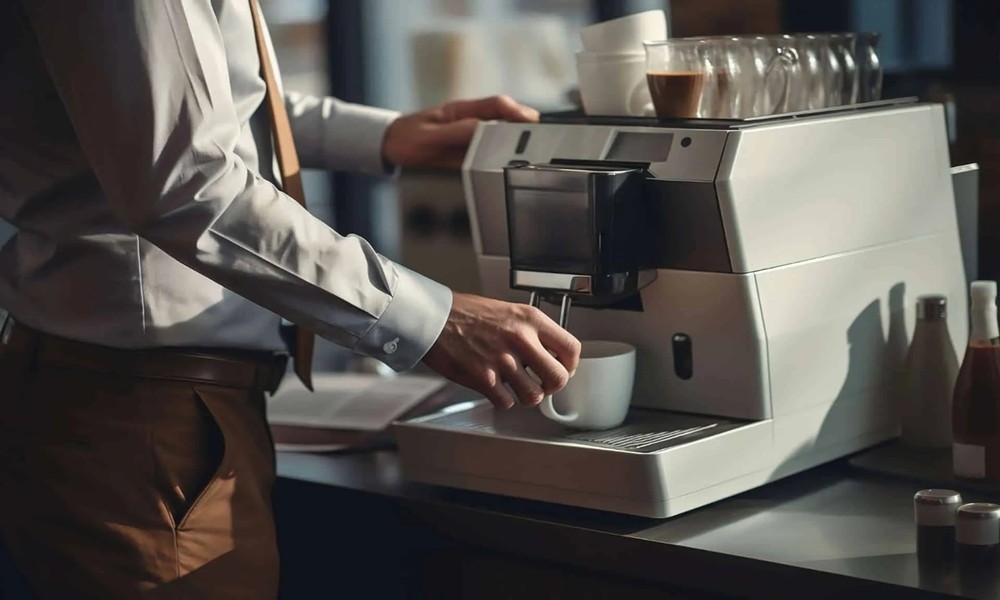
Coffee machine lease solutions for growing businesses offer a practical framework for accessing quality commercial equipment without the capital burden of ownership, while preserving the flexibility that a growing business requires.
Leasing vs Renting: Understanding the Distinction
Coffee machine lease and rental arrangements share many structural similarities but differ in important ways. A rental is typically shorter in terms, more flexible in exit conditions, and priced at a premium for that flexibility. A lease tends to run longer, is structured around a fixed term with defined end conditions, and often results in lower monthly costs in exchange for greater commitment.
For a business that has reached a stable size and can confidently project its coffee consumption needs for two or three years, a lease arrangement provides cost efficiency. For a business in a period of rapid growth or change, the rental model’s greater flexibility may be worth the additional monthly cost.
Understanding which structure fits the business’s current situation is the first step in making the right coffee equipment decision.
What Growing Businesses Need from a Coffee Solution
A business that is growing has different requirements from a mature, stable organisation. Growth creates:
- Increasing headcount: the machine specified for 40 people becomes inadequate when the team reaches 80
- Multiple locations: as the business expands to additional Singapore offices, the coffee solution needs to scale accordingly
- Evolving workplace culture: the expectations of new employees joining a rapidly growing team may differ from those of the founding group
- Budget management: growing businesses are often managing cash flow carefully and need costs that are predictable and controllable
Coffee machine lease arrangements that anticipate these dynamics – with upgrade provisions built into the agreement and multi-site capability from the outset – serve growing businesses better than static contracts.
Matching Machine Specification to Growth Stage
Selecting the right machine for the current stage of the business, with an upgrade path in mind, prevents the scenario where a team outgrows its coffee setup mid-lease with no practical way to change:
- Early stage (under 20 people): compact automatic machines with a medium daily output capacity; keep the contract short to allow easy upgrade
- Growth stage (20 to 60 people): mid-range commercial automatic machines with plumbed water connection and larger bean hoppers; build upgrade provisions into the lease
- Established (over 60 people): high-capacity commercial units with multiple boiler systems and faster throughput; longer lease terms make more sense at this scale
“Growth without a plan is just activity. Plan for where you want to be.” – Lee Kuan Yew
A coffee lease solution planned for the business’s growth trajectory, rather than just its current size, delivers better value over the full lease period.
The Financial Case for Leasing
The financial argument for leasing over purchasing comes down to opportunity cost and risk management:
- Capital preservation: the capital that would be spent on equipment purchase remains available for activities that generate revenue directly
- Risk transfer: equipment depreciation, technological obsolescence, and maintenance costs are absorbed by the supplier rather than the business
- Predictable cash flow: fixed monthly lease payments are easier to budget for than the irregular expense pattern of owned equipment maintenance and eventual replacement
- Tax treatment: lease payments may be treated as operating expenses depending on the structure, which has accounting and tax implications worth discussing with a financial advisor
Service Level in a Lease Arrangement
The service component of a coffee machine lease is as important as the equipment itself. A machine that goes down during a busy day costs more in operational disruption than its monthly lease fee. Lease arrangements that specify:
- Maximum response time for callouts during business hours
- A replacement machine provision if the primary unit cannot be repaired on the same day
- Regular preventative maintenance visits are included in the monthly fee
- A clearly defined consumable supply relationship
…provide the service continuity that a business coffee lease should guarantee.
Reviewing Lease Terms Before Commitment
Key terms to review before signing a coffee machine lease agreement:
- The total committed cost over the full lease term, including consumables at projected volumes
- The conditions and cost of early termination
- The process for machine upgrade mid-lease
- The state in which the machine must be returned at lease end
- Any fair wear and tear provisions that affect liability at return
Coffee machine lease solutions for growing businesses, structured around realistic terms and the right equipment specification, become a reliable and cost-effective foundation for the daily coffee experience that a scaling team deserves.
